


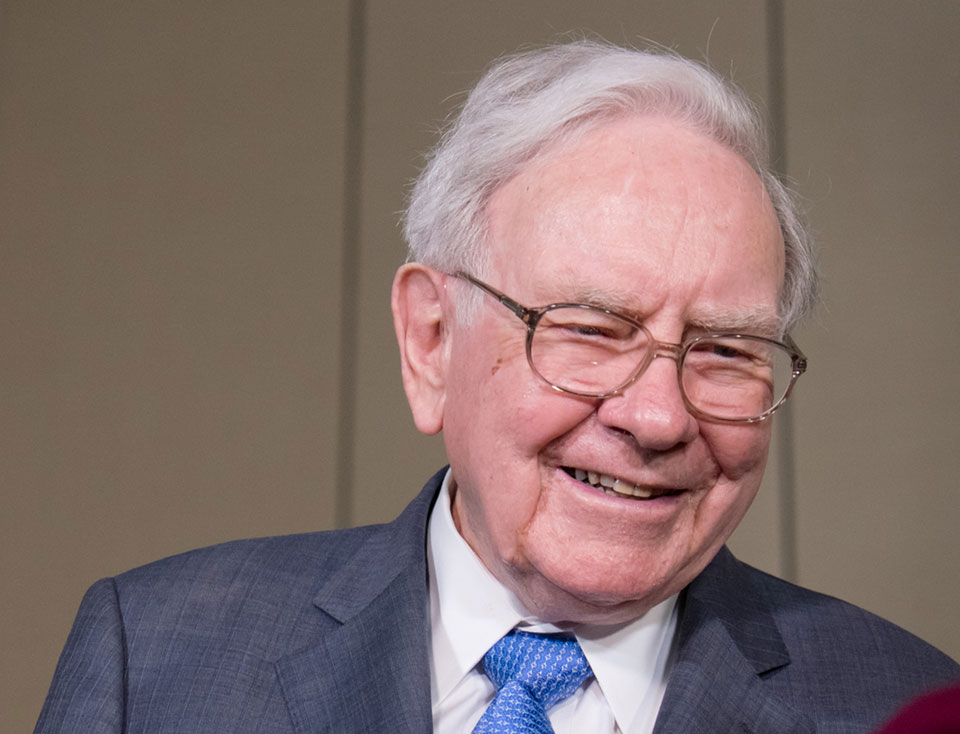
Berkshire Hathaway has disclosed that they have sold their complete remaining share in the biggest chipmaker globally, Taiwan Semiconductor Manufacturing Company (TSM). Warren Buffett was recently ranked No. 9 in a list of the world’s best CEOs for 2023; meanwhile, Berkshire Hathaway ranked No. 11 in the CEOWORLD magazine’s ranking of the most influential companies in the world.
In the previous quarter, Berkshire Hathaway (BRKA) disclosed that it had bought 60 million American depository receipts in TSMC, valued at around $4.1 billion. Back in February, it was disclosed by Berkshire Hathaway that they had sold 86% of their shares in TSMC. It was quite uncommon for Buffett to make a quick sale since he’s renowned for making long-term investments.
In recent weeks, Warren Buffett has repeatedly expressed concerns over the future of Taiwan. He mentioned that he had reconsidered the situation and came to the conclusion that he was not fond of it. In an interview with Nikkei Asia in April, Buffett admitted that geopolitical tensions were “a consideration” in selling the shares in TSMC.
“I feel better about the capital that we’ve got deployed in Japan than in Taiwan,” the Berkshire Hathaway chairman added. “I wish it weren’t sold, but I think that’s a reality.”
Despite the share sale, Buffett lauded Taiwan Semiconductor Manufacturing Company (TSM) as “one of the best-managed companies and [most] important companies in the world.”
“There’s no one in the chip industry that’s in their league, at least in my view,” he said.
“Marvelous people and marvelous competitive position and everything, [but] I’d rather find it in the United States.”
During an analyst call this month, the billionaire was asked to elaborate on his decision. He responded by stating that he had reevaluated the location and determined that he did not like it.
Have you read?
Largest Hotel Chains in the World, 2023.
Best Residence by Investment Programs for 2023.
International Financial Centers Ranking, 2023.
Best Citizenship by Investment (CBI) for 2023.
The World’s Most Valuable Unicorns, 2023.
Ready to join the CEOWORLD magazine Executive Council– Find out if you are eligible to apply.
Add CEOWORLD magazine to your Google News feed.
Follow CEOWORLD magazine headlines on: Google News, LinkedIn, Twitter, and Facebook.
This report/news/ranking/statistics has been prepared only for general guidance on matters of interest and does not constitute professional advice. You should not act upon the information contained in this publication without obtaining specific professional advice. No representation or warranty (express or implied) is given as to the accuracy or completeness of the information contained in this publication, and, to the extent permitted by law, CEOWORLD magazine does not accept or assume any liability, responsibility or duty of care for any consequences of you or anyone else acting, or refraining to act, in reliance on the information contained in this publication or for any decision based on it.
Copyright 2024 The CEOWORLD magazine. All rights reserved. This material (and any extract from it) must not be copied, redistributed or placed on any website, without CEOWORLD magazine' prior written consent. For media queries, please contact: info@ceoworld.biz
SUBSCRIBE NEWSLETTER