Argentina Citizenship by Investment 2026: Costs, Routes and Legal Status

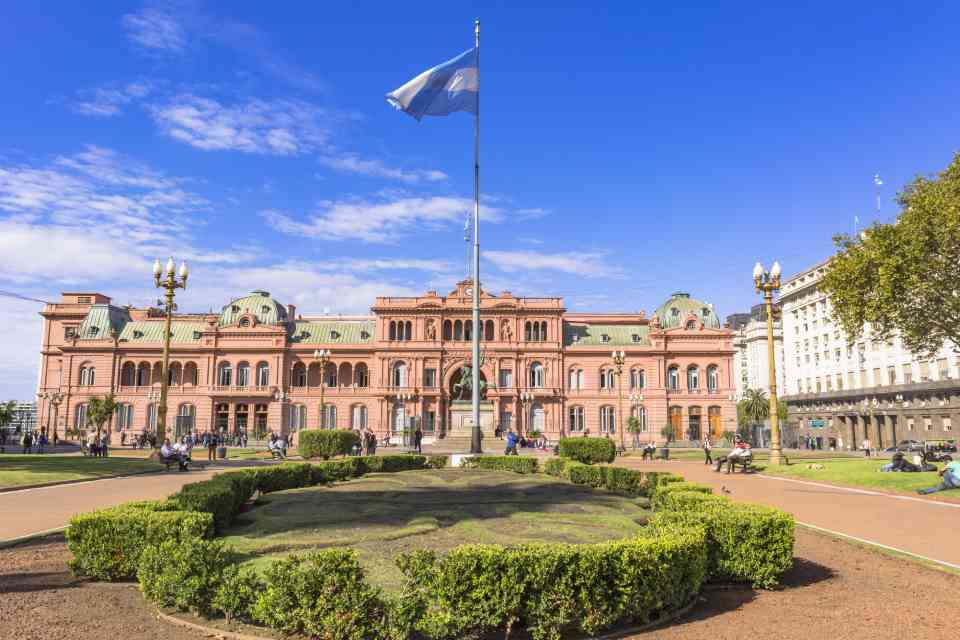
Argentina’s $350,000 Citizenship by Investment Plan Faces a Supreme Court Test
Argentina has announced a citizenship by investment programme. Foreign nationals will be able to obtain Argentine nationality and a passport, without first living in the country, in exchange for a non-refundable contribution of $350,000 to the National Treasury or a subscription of $800,000 to a government bond created for the purpose. Economy Minister Luis Caputo and Cabinet Chief Diego Santilli presented the programme in Paris on October 2, 2026, during Argentina Week, and said it would begin accepting applications in the fourth quarter of 2026.
The programme makes Argentina the largest economy in Latin America to sell citizenship directly, and the first in the region with a passport of comparable strength to do so. Its legal foundation, however, is weak. The programme rests on Decree of Necessity and Urgency 366/2025, an emergency decree that two Argentine appeals courts have found unconstitutional. The question is now before the Supreme Court. For wealthy families, their advisers and the industry that serves them, the central issue is less the programme’s price than whether the citizenship it grants will remain secure.
How Argentina’s Citizenship by Investment Programme Works
The principal applicant chooses between two routes. The first is a direct, non-refundable payment of $350,000 to the Treasury. The second is an $800,000 subscription to a government security that pays zero interest. Its maturity and redemption terms have not been officially published. Some market descriptions refer to a seven-year term, but the government has not confirmed this.
Family members may be added. A spouse and unmarried, childless children aged 18 to 25 each require a $100,000 contribution, and children under 18 require $25,000 each. A family of four with two minor children would therefore pay $500,000 under the Treasury route.
All payments must pass through the formal financial system. A new body, the Agency for Citizenship by Investment Programmes, will assess each application. It will draw on reports from the State Intelligence Secretariat, the Financial Information Unit and the ministries of security and the interior. Checks will cover identity, the lawful origin of funds, the applicant’s assets and finances, jurisdictional risk, criminal and reputational history, and migration history. The agency will make a recommendation, and the National Directorate of Migration will decide. The government says the framework follows OECD and Financial Action Task Force standards, and that it has retained international advisory firms specializing in investment migration.
“We believe it will be among the best citizenships of this kind in the world,” said Caputo. Santilli described it as “Argentina opening its arms to citizens of the world who want to come and invest.”
A Competitive Offer on Paper
By market standards, the terms are attractive. The five Eastern Caribbean programmes agreed in 2024 on a minimum investment of $200,000, and family costs there are often higher than headline figures suggest. Argentina asks for more, but it offers more in return. Its passport provides visa-free travel to the Schengen area and the United Kingdom. It also brings residence and mobility rights within MERCOSUR. A further advantage is that the passport belongs to a large, diversified country rather than a microstate whose programme revenue makes up a significant share of its economy.
The family pricing is notably generous. At $25,000 per minor child, Argentina has priced the programme for multigenerational families, a key segment for advisers to wealthy Latin American, Asian and Middle Eastern clients.
Citizenship also has limited tax implications on its own. Argentina, like most countries, taxes on the basis of residence rather than nationality. For many applicants, the passport is a hedge and a mobility tool, not a change of tax domicile.
The Legal Foundation Is the Weak Point
DNU 366/2025, signed on May 28, 2025, amended Argentina’s citizenship law, which dates from 1869. It allows a foreign national who makes a “relevant” investment to naturalize regardless of residence. It also moved the power to grant citizenship from the federal courts to the migration authority. A further decree, 524/2025, set out the procedure in July 2025.
The courts have twice ruled against the decree. On June 18, 2026, a federal civil and commercial appeals chamber found that no exceptional circumstances justified using an emergency decree to change the citizenship regime. On June 30, the National Electoral Chamber went further and declared the decree null. It reasoned that citizenship is inseparable from political rights, and the Constitution expressly bars emergency decrees on electoral matters. The government appealed. In September, the Electoral Chamber allowed the appeal to proceed, and the Supreme Court has begun reviewing the case.
Neither case concerned an investment applicant. Both involved ordinary naturalization claims. Yet the reasoning in both applies to the decree as a whole, including the provisions that create investment citizenship. Opposition legislators have also filed bills to repeal those provisions. Deputies Florencia Carignano and Paula Penacca argued that “citizenship cannot become an economic exchange.”
The government’s timetable therefore depends on a ruling that it does not control. If the Supreme Court upholds the lower courts, the programme would need a statute passed by Congress to survive. If the government proceeds before a ruling, applicants would acquire citizenship on a legal basis under active constitutional challenge.
Durability Is the New Price Signal
The investment migration market has learned in recent years that a passport’s value depends on how durable it is. In April 2025, the Court of Justice of the European Union ruled that Malta’s citizenship by investment programme breached EU law. The European Union has also suspended visa-free access for Vanuatu passport holders over concerns about its programme. In both cases, citizenship sold with confidence lost much of its value because of decisions outside the applicants’ control.
A useful way to assess any programme is to apply a four-part durability test:
- Legal foundation: Does the programme rest on a statute, a decree or administrative rules? Can it be reversed easily?
- Partner acceptance: Are the countries that grant visa-free access likely to accept the programme, or might they restrict it?
- Integrity of screening: Is the due diligence process credible to international regulators and correspondent banks?
- Political consensus: Does the programme have support beyond the current government?
Argentina scores well on partner acceptance at present and has designed a credible screening framework. It scores poorly on the other two tests. Its legal foundation is an emergency decree under challenge, and its political support is divided. A future government, a court or Congress could alter the programme. How existing citizens would be treated in that case remains untested.
Partner scrutiny is the less visible risk. The European Union has made clear its concern about investor citizenship programmes that grant visa-free access to the Schengen area. A large, well-screened programme is less likely to attract action than a small, permissive one. But Argentina’s EU visa-waiver status gives Brussels a lever, and Argentina is a new and potentially high-volume entrant.
The Fiscal Logic and Its Limits
The government has said the proceeds will strengthen Argentina’s fiscal and financial position. The programme fits President Javier Milei’s broader effort to rebuild hard-currency reserves and restore investor confidence. The scale should not be overstated. Even 1,000 approved applicants on the Treasury route, an illustrative figure rather than a forecast, would raise about $350 million, before family contributions. That amount is meaningful but small relative to Argentina’s external financing needs. The bond route raises dollar financing at zero cost, but it creates a future repayment obligation.
The programme’s real value to the government may be as a signal. It shows that Argentina is open to foreign capital. Its credibility as a signal, however, depends on the same institutional stability that the legal challenge calls into question.
Why This Matters for Business Leaders
For family offices, wealth managers and globally mobile executives, Argentina’s programme adds a significant new option. It offers a large-country passport at a mid-market price. Advisers should not treat it as equivalent to established programmes until the Supreme Court has ruled. Clients considering early application should be told clearly that the decree is under constitutional review and that the effect of an adverse ruling on citizenship already granted is uncertain. Prudent clients will wait for the ruling or for a statute passed by Congress.
Executive Takeaways
- What changed: Argentina has announced citizenship by investment from $350,000, with applications expected to open in the fourth quarter of 2026.
- Why it matters: The terms and passport are competitive, but the programme rests on an emergency decree that two appeals courts have declared unconstitutional.
- What leaders should do next: Advisers and families should treat the programme as promising but legally unsettled, and should time any application to the Supreme Court’s decision.
Argentina has built a credible screening framework and priced its programme competitively. It has not yet given the programme a secure legal basis. Over the next 12 to 24 months, the indicators to watch are the Supreme Court’s ruling on DNU 366/2025, any move by Congress to legislate or repeal, the publication of the bond’s terms, and any response from the European Union. In citizenship by investment, the passport is only as reliable as the law that grants it, and in Argentina that law has yet to be settled.
Have you read?
What Hungary’s Political Transformation Teaches About Leadership and Change.
Women in Power: Where Business and Political Leadership Converge.
Belize Participates in German Unity Day Celebrations in Panama.
How to Stop Bringing Workplace Stress Home.
Seven Healthy Aging Habits for Busy Women.

Follow CEOWORLD Magazine on: Google News, LinkedIn, X (Twitter), and Facebook.
Note: The views expressed are those of the authors and do not necessarily reflect those of CEOWORLD Magazine, its Editorial Board, or management. Content is provided "as is," may contain monetized links, and is not professional advice. See our Ethics & Guidelines for details. Reproduction requires prior written permission.
Contact info@ceoworld.biz for inquiries or media requests.