



A quick look at medicine’s history will show how it has been developed and whether this came with a price. In ancient Greece, doctors at the time wanted to see if it was better to sleep or exercise after launch and what consequences each choice would have. To find valuable results, they fed two enslaved people and let one of them sleep while they made the other run more than a hundred miles to deliver a message to another city. A few hours after the second person arrived, he died. Later on, the doctors came at that point, opened up his dead body, and examined the organs inside. The man who died was probably old but apart from that, running after lunch for such a long distance was not beneficial for him. The story tells us how people used to treat other people some centuries ago and how they prioritized science. Thankfully we don’t use such practices currently; however, we have not discovered a way to do medical research without using any living creature.
Today we see why animal testing is so popular and why scientists use it so much in their experiments.
- It has saved lives
The reality is that even though animal tasing sounds cruel, it has indeed helped thousands of people to live longer. Considering that some decades ago, cruel experiments were being conducted on humans without their approval, animal testing has come to relieve some of the pain humans have caused to others. For many people, the fact that animals are now the subjects of the experiment is a sign of a civilized attitude from our community. Of course, some people will argue that this is not right either. At this point, the only thing we can state is how animal testing has helped medical research without digging into the ethical part of this subject. - Short life cycles make research fast
Most of the animals that are being tested in the laboratories do live longer than people. This means their whole life cycle is shorter, allowing scientists to have fast results in their experiments. Especially when it has to do with things that need a long period to evolve, animals give researchers the perfect opportunity to find out what happens the soonest. - Animals are appropriate subjects for research
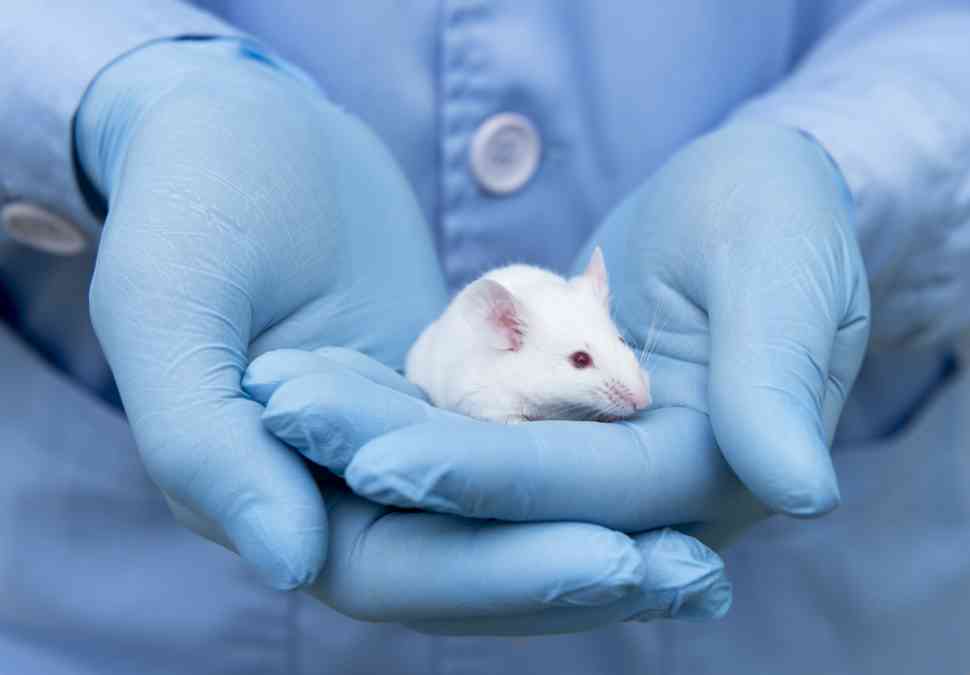
Regarding the tests of a drug, certain procedures have to take place to ensure that a treatment or cure is safe to be released on the market. The test has to be implemented on an alive being which carries all the biological functions that a human body can do, such as breathing, reproducing, etc. In many cases, animals have proven to offer an ideal playground for a test to be conducted and be able to assume what would happen if, in that case, we had a human. The most popular subject is often the mice with 98% similar DNA compared to ours. Mice also have short life cycles, and they don’t need extravagant facilities with a high cost to be reproduced, raised, and finally tested. At the same time, monkeys are 99% like us, and for most complicated treatments, they are preferred as a research subject instead of mice. In any case, the resemblance of animals’ DNA to ours is crucial. - Many steps have to be done
Since animal testing has become a real subject of conflict, legislation has become more strict to ensure that animals will not be mistreated. This happened to reduce people’s disapproval of scientific practices. Many sad things are happening in this world, and animal testing is not an exception. It is like choosing the worst-case scenario when you don’t have enough options. Meanwhile, activists denounce that only 5% of the animals used in the experiments are being protected by the law in the United States, leaving room for doubts to anyone who wants to trust the law in this case. One of the things that perhaps is relieving is that fewer mistakes are being made as medicine evolves. So every new test held has fewer possibilities for harmful errors. In other words, humans and animals have suffered so much on this planet that there are too many mistakes to be made anymore. Until recently, the concept of animal rights did not even exist. At least the people who work with them are scientists and well-educated people who love cute animals.
Add CEOWORLD magazine to your Google News feed.
Follow CEOWORLD magazine headlines on: Google News, LinkedIn, Twitter, and Facebook.
This report/news/ranking/statistics has been prepared only for general guidance on matters of interest and does not constitute professional advice. You should not act upon the information contained in this publication without obtaining specific professional advice. No representation or warranty (express or implied) is given as to the accuracy or completeness of the information contained in this publication, and, to the extent permitted by law, CEOWORLD magazine does not accept or assume any liability, responsibility or duty of care for any consequences of you or anyone else acting, or refraining to act, in reliance on the information contained in this publication or for any decision based on it.
Copyright 2024 The CEOWORLD magazine. All rights reserved. This material (and any extract from it) must not be copied, redistributed or placed on any website, without CEOWORLD magazine' prior written consent. For media queries, please contact: info@ceoworld.biz
SUBSCRIBE NEWSLETTER