


These Are The Top 20 Fastest (And The Slowest) Growing Cities In The U.S. 2018 Study

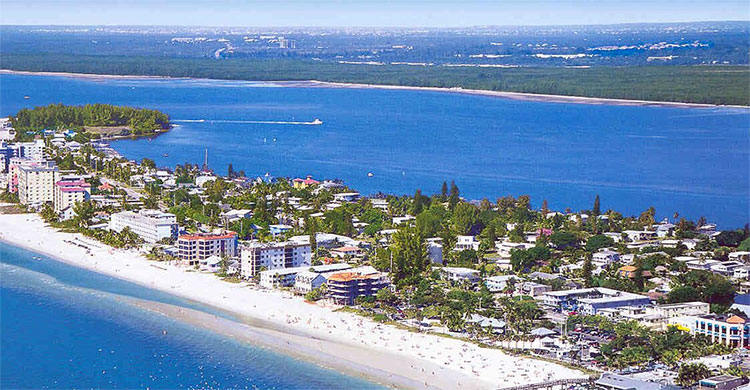
Well known for its beautiful beaches and resort hotels, Fort Myers, Florida, was named the fastest-growing city in the U.S. for 2018, that’s according to the personal-finance website WalletHub. The city is home to the Florida Gulf Coast University (FGCU).
Four Texas cities made the top 10, while Midland came in at No. 2 and Pearland at No. 3, the other two are Texas cities McKinney ranked No. 5 and College Station at No. 6 on the list as the fastest-growing cities in the U.S. 2018.
Decatur, Illinois was named the slowest-growing city in the U.S. for 2018. Shreveport, LA; Erie, PA; Lawton, OK; and Youngstown, OH rounded out the bottom five, at No. 514, No. 513, No. 512, and No. 511 respectively.
Top 20 Fastest-Growing Cities in the U.S.
- Fort Myers, Fla.
- Midland, Texas
- Pearland, Texas
- Bend, OR
- McKinney, Texas
- College Station, Texas
- Lehigh Acres, Fla.
- Mount Pleasant, SC
- Enterprise, NV
- Irvine, Calif.
- Milpitas, Calif.
- Pleasanton, Calif.
- Murfreesboro, TN
- Meridian, ID
- Redwood City, Calif.
- Frisco, Texas
- Round Rock, Texas
- Austin, Texas
- Miami, Fla.
- Saint George, UT
Top 20 Slowest-Growing Cities in the U.S.
- Decatur, IL (ranked 515th)
- Shreveport, LA
- Erie, PA
- Lawton, OK
- Youngstown, OH
- Cheektowaga, NY
- Montgomery, AL
- Waterbury, CT
- Springfield, IL
- Columbia, MD
- Longview, TX
- Baton Rouge, LA
- Hammond, IN
- Trenton, NJ
- Anchorage, AK
- Columbus, GA
- Joliet, IL
- Toledo, OH
- Flint, MI
- Fayetteville, NC (ranked 496th)
To compile the ranking, analysts compared 515 U.S. cities of varying population sizes based on two critical dimensions, “Sociodemographics” and “Jobs & Economy.”
Sociodemographics: population growth, working-age population growth (individuals aged 16 to 64), and college-educated population growth.
Jobs & Economy: job Growth: Double Weight, increase in ratio of full-time to part-time Jobs, median household income growth, unemployment rate decrease, poverty rate decrease, growth in regional GDP per capita, increase in number of businesses, increase in number of startups, increase in venture capital investment amount, median house price growth, building-permit activity growth, and foreclosure rate decrease.
The website categorized each city according to the following population-sizes: large cities (more than 300,000 people), midsize cities (100,000 to 300,000 people), and small cities (fewer than 100,000 people)
Add CEOWORLD magazine to your Google News feed.
Follow CEOWORLD magazine headlines on: Google News, LinkedIn, Twitter, and Facebook.
This report/news/ranking/statistics has been prepared only for general guidance on matters of interest and does not constitute professional advice. You should not act upon the information contained in this publication without obtaining specific professional advice. No representation or warranty (express or implied) is given as to the accuracy or completeness of the information contained in this publication, and, to the extent permitted by law, CEOWORLD magazine does not accept or assume any liability, responsibility or duty of care for any consequences of you or anyone else acting, or refraining to act, in reliance on the information contained in this publication or for any decision based on it.
Copyright 2024 The CEOWORLD magazine. All rights reserved. This material (and any extract from it) must not be copied, redistributed or placed on any website, without CEOWORLD magazine' prior written consent. For media queries, please contact: info@ceoworld.biz
SUBSCRIBE NEWSLETTER